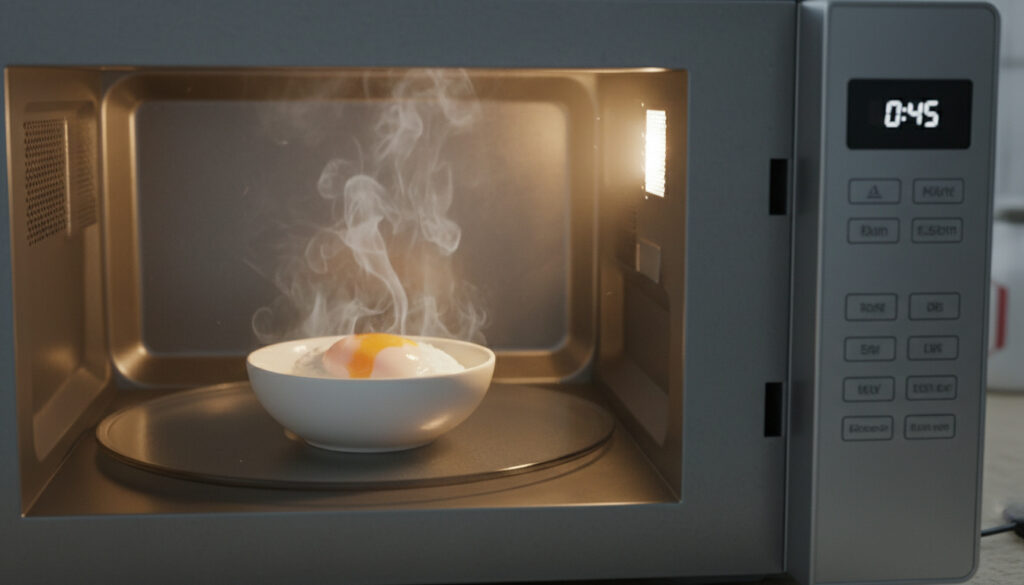
Poached Egg in Microwave – Fast Safe Guide
Poaching eggs in the microwave delivers restaurant-quality results in under a minute without the simmering water bath or vinegar typically required by stovetop methods. The technique suits busy home cooks seeking protein-rich breakfasts with minimal equipment and cleanup.
Despite its convenience, the method requires precise safety protocols. Steam pressure buildup causes eggs to explode violently if preparers skip critical steps like piercing the yolk. Understanding specific power settings, timing nuances, and container requirements ensures consistent results whether you prefer runny yolks or firmer centers.
How to Poach an Egg in the Microwave
Success depends on managing steam pressure and heat distribution. The Microwave Poached Egg Recipe (No Vinegar Version) demonstrates that room-temperature water eliminates the need for acidulation while preventing the rubbery texture associated with boiling water methods.
- Pierce the yolk membrane with a toothpick before cooking to release steam pressure
- Use room-temperature water (½ cup) for faster, more even heat distribution
- Cover the container loosely with plastic wrap or parchment to contain splatters while allowing venting
- Pause cooking midway to gently flip the egg, promoting uniform white coagulation
- Remove immediately with a slotted spoon to halt residual cooking
- Select fresh eggs for better structural integrity during the rapid heating process
| Microwave Wattage | Water Temperature | Egg Count | Runny Yolk Time | Firm Yolk Time |
|---|---|---|---|---|
| 1200W | Room temperature | 1 | 45–60 seconds | 60–75 seconds |
| 1000W | Room temperature | 1 | 60 seconds | 75 seconds |
| 800W | Room temperature | 1 | 75–90 seconds | 90–105 seconds |
| 1200W | Hot (pre-boiled) | 1 | 45 seconds | 60 seconds |
| Any wattage | Any | 2+ | Not recommended—uneven heating results | |
| 1000–1200W | Cold | 1 | Add 15–30 seconds to room-temp times | Add 15–30 seconds to room-temp times |
Is It Safe to Poach Eggs in the Microwave?
Microwave poaching remains safe when preparers follow specific pressure-release protocols. The FDA confirms that microwave cooking preserves food safety standards equivalent to conventional heating methods, provided eggs reach internal temperatures necessary to eliminate salmonella risk.
Why Do Poached Eggs Explode in the Microwave?
Steam buildup creates explosive force when yolks remain intact during rapid heating. According to Foodess, the yolk membrane traps water vapor as it heats past boiling point. Without an escape route, pressure accumulates until the egg ruptures violently, potentially causing burns and coating the microwave interior with hot egg debris.
How to Prevent Microwave Poached Eggs from Exploding
Piercing constitutes the primary defense against detonation. Another critical factor involves monitoring: never leave the microwave unattended during the cooking cycle. Using fresh rather than aged eggs reduces spreading, which helps contain steam within the white rather than allowing it to pool beneath the yolk.
Always pierce the yolk with a sharp toothpick or knife tip before microwaving. This single step releases steam pressure and prevents violent bursting that can cause serious burns and microwave damage.
How Long Should You Microwave a Poached Egg?
Timing varies primarily by microwave wattage and desired yolk consistency. BBC Good Food testing indicates that high-power units (1000–1200W) require 45–60 seconds for runny yolks, while lower-wattage appliances need proportionally longer intervals.
Microwave Poached Egg Power Level?
High power (100% setting) produces optimal results in most domestic microwaves. Lower power levels extend cooking duration without improving texture, potentially resulting in tough whites. For units below 800W, increment time in 10-second bursts after the initial 60-second interval to avoid overshooting the desired doneness.
Can You Poach Eggs in the Microwave Without Vinegar?
Vinegar serves no functional purpose in microwave poaching. The acid traditionally added to stovetop water helps coagulate whites faster in open boiling water, but the enclosed, steam-saturated environment of a covered microwave cup achieves similar protein coagulation without chemical additives.
Do You Need a Special Dish for Microwave Poached Eggs?
Standard microwave-safe ceramic mugs or ramekins suffice. The vessel must hold at least 6 ounces to accommodate ½ cup water plus the egg without overflow. Avoid shallow bowls, which increase splatter risk. Cover options include plastic wrap (loosely tented), parchment paper, or small saucers—any barrier that traps steam for cooking while preventing microwave contamination.
Room-temperature eggs and water reduce cooking time significantly compared to refrigerator-cold ingredients. Remove eggs from refrigeration 30 minutes before cooking, or place cold eggs in warm water for 5 minutes.
Fresh eggs maintain compact shapes during microwave poaching, while older eggs spread thinly and cook unevenly. Check freshness by placing eggs in water: fresh eggs sink horizontally, while aged eggs float or stand upright.
What Is the Step-by-Step Process for Microwave Poaching?
- Pour ½ cup room-temperature water into a microwave-safe cup (6-ounce minimum capacity) — Source: Recipe30
- Gently crack one fresh egg into the water, ensuring the yolk remains submerged
- Pierce the yolk membrane lightly with a toothpick or sharp knife tip to prevent pressure buildup — Source: Foodess
- Cover loosely with plastic wrap, parchment, or a saucer to contain steam while allowing limited venting
- Microwave on high power: start with 45 seconds for 1200W units (adjust for lower wattage)
- Pause at 30 seconds to gently flip the egg with a spoon, promoting even white coagulation
- Continue heating in 10–15 second increments until whites set but yolk remains soft
- Remove immediately using a slotted spoon; drain on paper towels to halt residual cooking
What Are the Established Facts Versus Variables?
| Established Information | Uncertain or Variable Factors |
|---|---|
| Piercing the yolk prevents explosion by releasing steam pressure | Exact second-count for every microwave model and altitude combination |
| Room-temperature ingredients cook faster than cold | Consistency when attempting simultaneous multiple-egg cooking |
| Single-egg preparation produces reliable results | Universal power settings for microwaves below 700W |
| High power (1000–1200W) yields 45–60 second cook times | Long-term effects of daily microwave egg preparation on appliance longevity |
How Does Microwave Poaching Compare to Traditional Methods?
Serious Eats testing reveals that microwave poaching trades the consistent shape of stovetop vinegar-poached eggs for significant time savings. The electromagnetic heating creates localized hot spots that require mid-cook flipping, whereas simmering water provides uniform heat distribution.
Nutritionally, both methods yield identical results: approximately 70–80 calories, 6g protein, and 5g fat per large egg, with preserved vitamin B12, choline, and lutein content. Neither method requires added fats, though stovetop preparation traditionally utilizes vinegar for protein coagulation. For a refreshing drink, check out this Long Island Iced Tea recipe.
| Aspect | Microwave (No Vinegar) | Stovetop (Traditional) |
|---|---|---|
| Time | 45–90 seconds per egg | 5–10 minutes boil + 3–4 minutes poaching |
| Ease | No pot required; minimal monitoring | Requires steady temperature maintenance |
| Equipment | Cup, cover, microwave | Pan, vinegar, slotted spoon |
| Risk | Explosion if yolk unpierced | Dispersed whites, overcooking |
| Result | Runny yolk possible; uneven heat distribution | Consistent shape with vinegar assistance |
What Do Food Safety Experts Recommend?
Pierce the yolk lightly with a toothpick or sharp knife to release pressure and prevent explosion.
— Foodess
Do not cook two at once—microwave heats unevenly, leaving runny whites and overcooked yolks.
— Recipe30
What Should You Remember for Perfect Results?
Mastering microwave poached eggs requires piercing the yolk, using room-temperature ingredients, and monitoring cooking in short bursts. While faster than stovetop methods, the technique demands attention to prevent explosive steam buildup. For detailed visual guidance, review How to Poach Eggs in the Microwave.
Frequently Asked Questions
Do you need a special dish for microwave poached eggs?
No special equipment required. Any 6-ounce or larger microwave-safe mug, ramekin, or cup works. Avoid shallow bowls that increase splatter risk.
Can you poach multiple eggs in the microwave?
Cooking two eggs simultaneously produces uneven results—runny whites and overcooked yolks. Prepare eggs individually, reusing the same water for subsequent servings.
Why do eggs explode in the microwave?
Steam pressure builds within the yolk membrane during rapid heating. Without piercing to create a vent, pressure accumulates until the egg ruptures violently.
Is microwaved poached egg nutrition different from stovetop?
Nutritional profiles remain identical. Both methods preserve approximately 70 calories, 6g protein, and micronutrients like B12 and choline without added fats.
Do older eggs work for microwave poaching?
Fresh eggs maintain shape better. Older eggs spread thinly in water, cooking unevenly and potentially creating texture inconsistencies.
Can you reheat microwave poached eggs?
Reheating risks overcooking and rubbery texture. Prepare eggs immediately before consumption for optimal yolk consistency.
What power level works best for microwave poached eggs?
High power (100%) produces best results. Lower wattage microwaves require longer cooking times but should still use high power settings.
More related posts
 Low Rise Jeans – Complete Guide for UK Shoppers 2025
 Sofia Carson Movies and TV Shows – Complete Filmography Guide
 Appliances Direct Discount Code – Save on Premium Brands
 Cast of Asteroid City – Full Actors and Roles Guide
 When Is Ramadan 2025 – UK London Saudi Dates
 Rosa Salazar Movies and TV Shows – Complete Filmography and Biography
 UEFA Women’s Champions League – Complete Guide to Format and History
 Internal Temp of Chicken – Safe 165°F Cooking Guide
