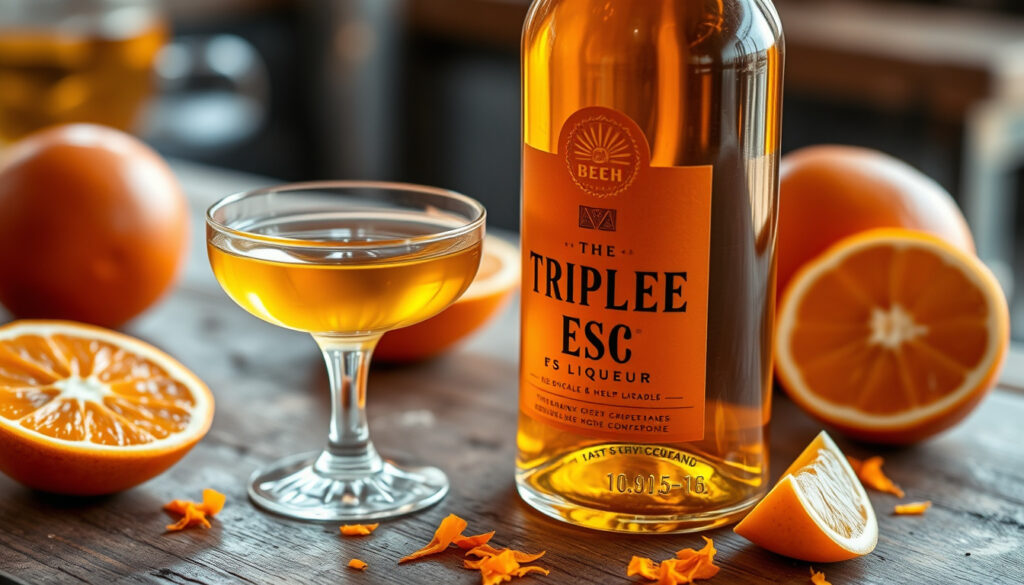
What Is Triple Sec – Complete Guide to This Orange Liqueur
Behind the bar, behind the Margarita, behind the bright citrus note in a Cosmopolitan or a Sidecar, there is a clear, sweet orange liqueur known as triple sec. It is one of the most widely used spirits in cocktail culture, yet its precise origins remain a matter of debate among historians and distillers. Some sources trace its invention to the Cointreau brothers in France around 1875, while others point to the Combier distillery and a slightly later trademark. What is not disputed is that triple sec — a French term whose exact meaning is still discussed — has become an indispensable ingredient in bars around the world, valued for its ability to deliver a clean, candied orange flavor without altering the color of a drink.
The category itself is broad. Triple sec is not a single brand or a tightly regulated product. It is a type of orange liqueur that typically falls between 20 and 40 percent alcohol by volume, though premium expressions often sit at the higher end of that range. The best-known brand within the category is Cointreau, which many drinkers mistakenly treat as a separate entity. In reality, Cointreau is a premium triple sec — one that helped define the category in the first place. Understanding this distinction matters for anyone choosing a bottle, whether for a home bar or a professional cocktail menu.
What Is Triple Sec? Definition and Origin
Triple sec is an orange-flavored liqueur that originated in France. It is clear, sweet, and made by distilling or infusing neutral spirits with the peels of bitter and sweet oranges. The spirit is rarely consumed on its own, but it plays a foundational role in many classic cocktails, where it adds both sweetness and a concentrated orange aroma.
Orange-flavored liqueur
France (late 19th century)
20–40% ABV (standard), 38–42% (premium)
Bitter orange peels (Curaçao oranges)
Clear
Margaritas, Sidecars, Cosmopolitans
Key insights
- Triple sec is not a brand but a category of orange liqueur, with Cointreau being the most famous example.
- The name “triple sec” may refer to triple distillation or triple the sweetness, but its true origin is debated.
- Triple sec’s clean, crisp orange flavor comes from the use of bitter Laraha oranges (Curaçao).
- Despite its sweetness, triple sec is a spirit (liqueur) and not a cordial or mixer.
- Premium triple secs often have higher alcohol content (40%+) and less added sugar.
Fast facts about triple sec
| Fact | Detail |
|---|---|
| Alcohol by volume | 20–40% ABV |
| Best-selling brand | Cointreau |
| Classic Margarita ratio | 2:1:1 (tequila, triple sec, lime juice) |
| Natural color | Clear |
| Calories (1.5 oz) | Approximately 160–200 |
According to Wikipedia, triple sec is defined as an orange-flavored liqueur that usually contains 20–40% alcohol by volume. Difford’s Guide adds that better-quality examples are typically between 38 and 42% ABV, reinforcing the link between higher proof and higher quality.
What Is Triple Sec Made Of? Ingredients and Production
The core ingredients are straightforward: a neutral spirit, orange peels, and sugar. But the way those elements are handled separates a generic bottle from a premium one. Most triple secs begin with a neutral spirit distilled from sugar beets, which is preferred for its clean, unobtrusive character. Some producers use cane sugar instead. The orange peels — often a blend of sweet and bitter varieties — are harvested while still green to preserve the essential oils in the skin. Those peels are sun-dried or directly steeped in the spirit before the mixture is redistilled, typically in copper stills, to concentrate the orange flavor. Finally, the spirit is sweetened with powdered beet sugar and diluted with water to reach the desired alcohol level.
What types of oranges are used?
Bitter oranges, especially the Laraha orange from the island of Curaçao, are central to the profile of traditional triple sec. Sweet orange peels are also used by many brands to add roundness. Cointreau, for example, uses a proprietary blend of sweet and bitter orange peels sourced from multiple countries, including Spain and Ghana. The specific combination is a closely guarded trade secret.
Is triple sec gluten-free?
Most triple secs are made from distilled grains or sugar beets, and distillation removes gluten proteins. However, individuals with celiac disease may wish to choose brands that explicitly use a sugar cane or grape spirit base to eliminate any risk.
Cointreau is triple-distilled in copper stills and bottled at 40% ABV. The triple-distillation process is part of what gives it a smoother, more refined character compared to many generic triple secs, which may only be distilled once or twice.
For those curious about making triple sec at home, the basic approach involves steeping fresh green orange peels in a neutral spirit such as vodka, then adding a simple sugar syrup to taste after the peels have infused. Commercial recipes are far more complex and often proprietary, but the homemade method can yield a pleasant, custom-strength orange liqueur in the range of 30–40% ABV.
What Is Triple Sec Used For? Cocktails and Recipes
Triple sec is rarely the star of the show, but it is almost never absent from the supporting cast. Its primary role in a cocktail is to provide a bright, citrusy sweetness that balances sour ingredients like lime or lemon juice and complements spirits such as tequila, vodka, brandy, and rum.
What is triple sec in a Margarita?
In a classic Margarita, triple sec is the sweetener that balances the tartness of fresh lime juice and the bite of tequila. The standard ratio is two parts tequila, one part triple sec, and one part lime juice. Without triple sec, the drink becomes a Daisy, not a Margarita. Many bartenders prefer Cointreau for this application because its higher alcohol content and less cloying sweetness allow the tequila to come forward.
Classic cocktails that use triple sec
- Margarita — tequila, triple sec, lime juice
- Cosmopolitan — vodka, cranberry, lime, triple sec
- Sidecar — cognac, lemon juice, triple sec
- Mai Tai — rum, orgeat, lime, triple sec
- Long Island Iced Tea — multiple spirits plus triple sec and cola
- Cadillac Margarita — a Margarita with a float of Grand Marnier, often alongside triple sec in the mix
Triple sec also appears in sangria and mimosas, where its orange aroma can boost fruit-forward profiles. As WebstaurantStore notes, it adds a bright, citrusy sweetness that works across a wide range of mixed drinks.
Can you drink triple sec straight?
Yes, but its high sugar content makes it very sweet and syrupy when consumed neat. Some drinkers enjoy it over ice as a small after-dinner sipper, but it is far more common as a cocktail component.
Triple Sec vs Cointreau: What’s the Difference?
This is the most frequently asked question about orange liqueurs, and the answer can be summed up in one sentence: Cointreau is a brand of triple sec, not a separate category. Every bottle of Cointreau is a triple sec, but not every triple sec is Cointreau. The distinction matters because quality, flavor profile, and alcohol content vary significantly among the dozens of brands that fall under the triple sec umbrella.
| Aspect | Triple Sec (Generic) | Cointreau (Premium Triple Sec) |
|---|---|---|
| Type | Broad category; varies by brand | Branded triple sec (since 1875) |
| Flavor | Candied orange peel; sweet, bright | Balanced bitter/sweet; refined, drier |
| ABV | 20–40% | 40% |
| Production | Neutral grain/sugar beet + peels | Specific sweet/bitter peels, copper stills |
| Use | Budget cocktails | Elevated drinks; interchangeable but superior |
| Price/Quality | Varies (cheaper options) | Higher-end, consistent |
VinePair explains that Cointreau is often called the “original” triple sec because of its 1875 origins, and it remains the benchmark against which other triple secs are measured. Spirit of the Wench notes that swapping generic triple sec for Cointreau in a cocktail adds “finesse” — a perceptible improvement in balance and mouthfeel.
Grand Marnier is often confused with triple sec, but it is a different product. Grand Marnier is a cognac-based orange liqueur that is heavier, sweeter, and darker in color. It is not a triple sec. When substituting Grand Marnier for triple sec, use less to avoid overpowering the drink.
Curaçao is another orange liqueur that is sometimes mistaken for triple sec. It is typically sweeter, may include spice or herb notes, and can be found in blue, orange, or clear varieties. Despite the differences, Curaçao and triple sec can often be swapped in cocktails with minor adjustments to sweetness.
For a deeper look at how these spirits compare, see the Ultimate guide to cocktail liqueurs.
What Are the Best Substitutes for Triple Sec?
When a recipe calls for triple sec and none is on hand, several alternatives can fill the role. The best substitute depends on the cocktail and the desired outcome.
Substitutes ranked by compatibility
- Cointreau — a 1:1 replacement; it is simply a premium triple sec and will improve the drink.
- Curaçao — slightly sweeter and sometimes spiced, but works well in most recipes at a 1:1 ratio.
- Grand Marnier — use about three-quarters of the amount called for, as its cognac base is richer and more intense.
- Orange juice — a non-alcoholic option for a “skinny” Margarita; it changes the texture and lowers alcohol content.
- Homemade orange simple syrup — can replace both sweetness and orange flavor, though it lacks the alcoholic structure.
Feast + West recommends Cointreau as the best substitute for a Margarita because its 40% ABV and balanced flavor keep the drink from becoming too sweet. A Bar Above agrees, noting that Cointreau is less sweet than most generic triple secs and has a more refined orange character.
For a classic Margarita, the How to make a classic Margarita guide provides the exact ratios and recommendations for choosing the right orange liqueur.
How Did Triple Sec Originate? A Timeline
The early history of triple sec is not fully settled, but a sequence of key events is generally accepted by drinks historians.
- Late 1800s — Triple sec is created in France, often attributed to Jean-Baptiste Combier or the Cointreau brothers, depending on the source.
- 1875 — The Cointreau brand introduces its triple sec recipe, which later becomes the global market leader.
- 1938 — The Combier brand registers the “Triple Sec” trademark, creating a competing historical claim.
- Mid-20th century — Triple sec becomes a staple in cocktail culture, especially as the Margarita gains popularity in the United States.
- 2020s — A rise in craft distilleries leads to small-batch triple secs with higher proof and fresh orange character, pushing the category toward premiumization.
Historical details vary by source, and the exact inventor remains uncertain. Both Cointreau and Combier present their own version of events, and no independent authority has definitively settled the question.
What Do We Know and Not Know About Triple Sec?
The available evidence allows for a clear distinction between what is well established and what remains uncertain.
| Established information | Information that remains unclear |
|---|---|
| Triple sec is an orange-flavored liqueur. | The origin of the name “triple sec” (triple distillation vs. triple sweetness) is debated. |
| It is clear and contains 20–40% ABV. | The exact inventor and year of first creation are contested between Combier and Cointreau. |
| The bitter orange peel is the core flavoring agent. | Some sources claim triple sec must be made with Curaçao oranges, while others allow any bitter orange. |
| Cointreau is a brand of triple sec. |
Why Does Triple Sec Matter in Cocktails?
Triple sec sits at an interesting intersection of affordability and versatility. It is one of the few liqueurs that appears in both low-cost well drinks and high-end craft cocktails. Its bright orange flavor complements citrus spirits and liqueurs, making it indispensable in bars that serve a wide range of classic recipes. The ongoing debate over what constitutes “true” triple sec often comes down to quality: cheaper versions rely on artificial flavors and lower alcohol content, while premium brands like Cointreau and Combier use natural orange oils and maintain a higher proof. As cocktail culture evolves, bartenders increasingly prefer triple secs at 40% ABV for better balance and a cleaner finish. The market, however, remains dominated by a few global brands, with craft distilleries slowly gaining ground by emphasizing fresh, locally sourced orange character.
What Do Authoritative Sources Say About Triple Sec?
Several respected sources provide clear, consistent information about the category. Wikipedia offers a neutral definition that covers the core characteristics. Difford’s Guide, a specialist resource for spirits, adds precision about alcohol levels and quality tiers. WebstaurantStore provides a practical overview aimed at bar and restaurant buyers. The following quotes capture the essential consensus.
“Triple sec is an orange-flavoured liqueur that originated in France. It usually contains 20–40% alcohol by volume.”
— Wikipedia
“Triple sec refers to a clear orange-flavoured liqueur typically between 20 and 40% alc./vol., although better-quality examples are usually between 38 and 42%.”
— Difford’s Guide
“Triple sec is an orange-flavored liqueur commonly used in cocktails to add a bright, citrusy sweetness.”
— WebstaurantStore Blog
What Is the Outlook for Triple Sec?
The category is moving toward higher quality across the board. Consumers and bartenders are showing increased demand for premium triple secs with higher ABV and natural ingredients. Some cocktail bars have begun creating house-made triple sec using sous-vide or cold-infusion techniques to develop unique flavor profiles. For anyone choosing a bottle, tasting different brands — Cointreau, Combier, Luxardo, and others — reveals the range of what triple sec can be. Checking the label for alcohol content is a practical shortcut: higher proof often correlates with better quality and less added sugar. Experimenting with substitutions in classic cocktails is another way to understand how triple sec affects balance and sweetness.
Frequently Asked Questions
Is triple sec vodka?
No, triple sec is a liqueur (sweetened spirit) made from neutral spirit and orange flavor, while vodka is a neutral spirit with no added sugar or flavor.
How many calories are in triple sec?
A 1.5 oz (45 ml) serving of triple sec contains approximately 160–200 calories, mostly from sugar and alcohol.
Can I drink triple sec straight?
Yes, but it is very sweet and syrupy. It is more commonly used as a cocktail ingredient or in small amounts as a sipper over ice.
What is the difference between triple sec and orange liqueur?
Triple sec is a type of orange liqueur. All triple secs are orange liqueurs, but not all orange liqueurs are triple sec (e.g., Grand Marnier is a cognac-based orange liqueur that is not a triple sec).
Is triple sec gluten-free?
Most triple secs are made from distilled grains (neutral spirit) and do not contain gluten after distillation. However, if you have celiac disease, choose brands that use sugar cane or grape spirit.
More related posts
 How Much Is a 1st Class Stamp – $0.78 July 2025
 Daily Dose of Sunshine – A Rare Look at Psychiatric Care
 Swimming Pools Near Me – Public Pools, Hours, Costs Guide
 Bereavement Leave – UK Rights, Pay and Employer Policies
 Ellie Goulding – Using Nelko Label Makers for Organization
 David Bradley – Guide to the Harry Potter and Game of Thrones Actor
 Emilia Fox – From Pride and Prejudice to Silent Witness
 Stone Island New Balance – 574 Ghost Spring 2026 Details
