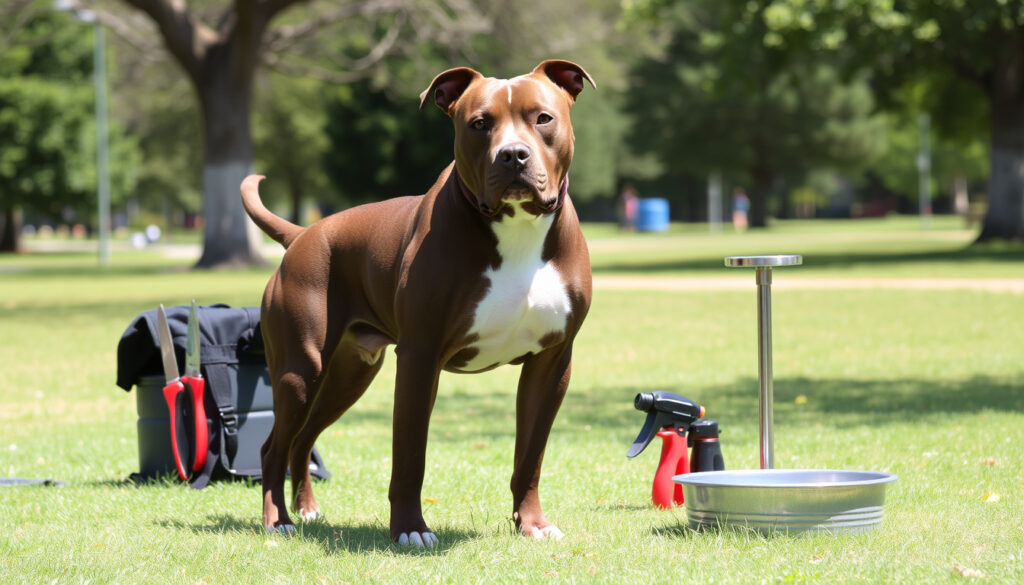
American Pit Bull Terrier – Guide to Size, Temperament, Care
American Pit Bull Terrier Breed Guide
The American Pit Bull Terrier stands as one of the most misunderstood dog breeds in the United States. Developed over 150 years ago, this medium-sized, solidly built canine combines remarkable strength with surprising athleticism, creating a dog that excels in various working roles while serving as a loyal family companion when properly trained and socialized.
Unlike many breeds recognized by multiple kennel clubs, the American Pit Bull Terrier maintains a distinct identity through the United Kennel Club, which has preserved the breed’s functional standards since its founding. The breed’s powerful, athletic build—combining strength, agility, and grace without appearing bulky—reflects its historical purpose as a versatile working dog capable of tasks requiring both physical power and quick movement.
Prospective owners considering this breed should understand that successful guardianship requires commitment to consistent training, substantial daily exercise, and early socialization. The American Pit Bull Terrier thrives when given clear boundaries and engaging physical activities, making them well-suited for active individuals or families who can meet their considerable energy requirements.
What Is the American Pit Bull Terrier Temperament?
The American Pit Bull Terrier temperament encompasses a range of qualities that may surprise those familiar only with media portrayals of the breed. According to breed standards and expert sources, these dogs display an active, loyal, and eager-to-please disposition that makes them responsive to training when approached with proper techniques.
- Powerful, muscular build meeting specific UKC standards for functional balance
- Affectionate and people-oriented nature when properly socialized from an early age
- High energy levels requiring 45-60 minutes of daily exercise
- Strong jaws necessitating indestructible chew toys for mental stimulation
- Eager-to-please disposition making them responsive to consistent training methods
- Athletic capabilities enabling participation in agility, dock diving, and other dog sports
- Short coat requiring minimal grooming but low body fat requiring indoor shelter in extreme weather
| Physical Attribute | Specification |
|---|---|
| Height (Males) | 18-21 inches at withers |
| Height (Females) | 17-20 inches at withers |
| Weight (Males) | 35-60 pounds |
| Weight (Females) | 30-50 pounds |
| Coat Type | Short, smooth, low maintenance |
| Energy Level | High – requires substantial daily activity |
The United Kennel Club emphasizes that American Pit Bull Terriers are reliable companions when properly trained and socialized. Their people-oriented nature means they typically bond strongly with their families and can develop separation anxiety if left alone for extended periods without appropriate preparation.
What Is the American Pit Bull Terrier Size and Weight?
The American Pit Bull Terrier falls into the medium-sized category, though individual dogs may vary within established parameters. According to UKC standards, males typically stand 18 to 21 inches at the withers, while females measure between 17 and 20 inches. Weight follows a similar pattern, with males ranging from 35 to 60 pounds and females from 30 to 50 pounds when in good physical condition.
Understanding Breed Standards and Variations
The United Kennel Club specifies that dogs falling outside these ranges are not automatically penalized unless their deviation appears disproportionate in ways that might compromise health or physical ability. Some sources report broader ranges, with males occasionally reaching 17 to 22 inches and 30 to 75 pounds, while females may span 17 inches and 30 to 60 pounds.
This variation reflects the UKC’s emphasis on functional balance over strict uniformity. Rather than disqualifying dogs for falling slightly outside preferred measurements, the standards focus on whether a dog’s physical structure enables the breed’s historical working capabilities. A dog appearing disproportionately massive or rangy, however, may receive fault marks if such proportions would hinder performance.
Physical Build Characteristics
The breed’s build combines strength, agility, and grace in a configuration that should not appear bulky or rangy. Their powerful musculature reflects historical roles as catch dogs—dogs used for holding, wrestling, and pulling in various working contexts. Despite this muscular development, the breed maintains an athletic quality that supports agility and quick movement.
Prospective owners should note that American Pit Bull Terriers carry relatively low body fat despite their muscular frames. This characteristic means they require indoor shelter during extreme weather conditions and benefit from climate-controlled environments, particularly in cold climates where other breeds might tolerate outdoor exposure more readily.
What Is the American Pit Bull Terrier Lifespan?
American Pit Bull Terriers typically enjoy a lifespan of 12 to 14 years, placing them within the normal range for medium-sized breeds of similar athletic build. Some sources suggest that with attentive care—including regular veterinary examinations, balanced nutrition, and appropriate exercise—individual dogs may reach 12 to 16 years of age.
Common Health Considerations
Like all breeds, the American Pit Bull Terrier carries predisposition to certain health conditions that responsible owners should monitor. Allergies represent one of the more frequently encountered issues, potentially causing itching, skin irritation, and hair loss that may require dietary adjustments or veterinary intervention to manage effectively.
Eye conditions including cataracts and progressive retinal atrophy have been documented in the breed, making regular ophthalmological examinations valuable for early detection. Hip and elbow dysplasia also occur, particularly in dogs bred without appropriate health screening of breeding stock. Additionally, the breed shows some tendency toward weight gain that can stress joints and reduce overall quality of life if not addressed through portion control and consistent exercise.
The American Kennel Club notes that the related American Staffordshire Terrier breed carries predisposition to cerebellar ataxia, a neurological condition affecting movement coordination. While this specific condition is more commonly associated with AmStaffs, prospective American Pit Bull Terrier owners should discuss hereditary health concerns with breeders and veterinarians to ensure appropriate screening.
Supporting Longevity
Maximizing an American Pit Bull Terrier’s lifespan involves several interconnected factors. Regular veterinary checkups enable early identification of developing issues before they become serious problems. A balanced diet appropriate for the dog’s age, activity level, and any specific health requirements helps maintain optimal weight and nutritional status.
Given the breed’s high energy requirements and athletic nature, providing appropriate mental and physical stimulation supports both physical health and behavioral wellbeing. Dogs receiving insufficient exercise may develop destructive behaviors or experience stress-related health issues, while those provided with appropriate outlets typically demonstrate better overall temperament and physical condition.
American Pit Bull Terrier vs Pitbull: Key Differences
Confusion surrounding terminology represents one of the most significant challenges when discussing American Pit Bull Terriers. The term “Pitbull” functions as an umbrella designation that encompasses multiple breeds and mixed-breed dogs sharing similar physical characteristics, rather than referring to a single distinct breed.
The “Pitbull” Misconception
Sources consistently indicate that “Pitbull” commonly describes dogs labeled by appearance—including stocky build, wide mouth, square head, and short coat—regardless of actual genetic heritage. Dogs labeled as “Pitbulls” may include American Pit Bull Terriers, American Staffordshire Terriers, American Bullies, or various mixes combining these or other bully breed ancestry. Weight ranges for dogs broadly labeled as Pitbulls span considerably, from approximately 30 to 85 pounds depending on the specific breeds contributing to an individual dog’s genetics.
The American Pit Bull Terrier, by contrast, maintains breed purity as recognized by the United Kennel Club specifically. These dogs have maintained their type for over 150 years as versatile workers, with documented lineage emphasizing functional characteristics rather than appearance-driven classifications.
Distinguishing the APBT
When comparing an American Pit Bull Terrier to dogs commonly labeled as “Pitbulls,” several distinctions emerge. The APBT tends toward a leaner, taller configuration with higher energy levels than many dogs falling under the broader Pitbull designation. Their athletic build prioritizes the combination of strength and agility that supported historical working roles.
Dogs labeled as Pitbulls may include stockier specimens reflecting American Staffordshire Terrier influence or more heavily muscled American Bully genetics. Without documented pedigree or genetic testing, visual identification alone cannot reliably distinguish an American Pit Bull Terrier from other dogs sharing similar physical traits.
- “Pitbull” is not a breed name but an umbrella term for appearance-based classification
- The American Pit Bull Terrier is one specific breed within the broader category
- UKC recognition distinguishes the APBT from mixed-appearance dogs
- Visual identification alone cannot confirm breed composition
- Size variation within “Pitbull” labels ranges from 30 to 85 pounds
American Pit Bull Terrier vs American Staffordshire Terrier
Comparing the American Pit Bull Terrier to the American Staffordshire Terrier reveals important distinctions despite considerable superficial similarity. Both breeds share ancestry and physical characteristics, yet their recognition, standards, and some physical traits differ in ways that matter to prospective owners and breed enthusiasts.
Recognition and Registration
The most fundamental difference lies in kennel club recognition. The American Pit Bull Terrier receives recognition through the United Kennel Club but notably does not appear in American Kennel Club registries. The American Staffordshire Terrier, conversely, holds AKC recognition as a member of the Terrier Group, with lineage tracing to 1800s-era “Pitdog/Pitbull Terrier” roots.
The United Kennel Club emphasizes functional balance in its APBT standards, prioritizing the power and agility required for working purposes. The organization applies no color disqualifiers except for merle, and faults dogs primarily for disproportions that would compromise working ability. The American Kennel Club’s approach to the American Staffordshire Terrier emphasizes stricter uniformity and specific physical type, with standards prioritizing consistent appearance across registered specimens.
Physical and Temperamental Differences
American Pit Bull Terriers display more variation in size and build, reflecting the UKC’s functional priorities. Males typically measure 17 to 22 inches (desirably 18 to 21) and weigh 30 to 75 pounds (desirably 35 to 60). American Staffordshire Terriers show greater uniformity, with males standing 18 to 19 inches, females 17 to 18 inches, and weight ranging from 40 to 70 pounds in a stockier configuration overall.
The breeds also differ in energy levels, with the APBT generally showing higher energy and a leaner build compared to the AmStaff’s stockier frame. Lifespan variations exist as well, with AmStaffs ranging from 12 to 16 years under optimal care while APBTs typically average 12 to 14 years. The AmStaff’s stricter breeding standards have, in some lines, introduced health concerns including cerebellar ataxia that appears less frequently in APBT populations.
| Characteristic | American Pit Bull Terrier | American Staffordshire Terrier |
|---|---|---|
| Recognition | UKC only | AKC (Terrier Group) |
| Height (Males) | 17-22 inches (des. 18-21) | 18-19 inches |
| Height (Females) | 17-20 inches | 17-18 inches |
| Weight (Males) | 30-75 lbs (des. 35-60) | 40-70 lbs |
| Weight (Females) | 30-60 lbs | 40-70 lbs |
| Build | Leaner, more agile | Stockier, heavier |
| Lifespan | 12-14 years | 12-16 years |
| Energy Level | Higher | Moderate to high |
Overlapping Traits and Shared Qualities
Despite their differences, both breeds share several key characteristics. Each displays an affectionate, people-oriented temperament when properly socialized. Both respond well to firm, consistent training approaches and benefit from early exposure to various people, animals, and environments. Their short coats require minimal grooming, and both breeds need substantial exercise to maintain physical and behavioral health.
The terms “Pitbull” frequently encompass both breeds and their mixes in common usage, creating confusion that affects breed-specific legislation, insurance policies, and public perception. Experts note that while these breeds share ancestry and overlapping characteristics, they are not interchangeable—each maintains distinct standards, breeding priorities, and, in some cases, temperament nuances.
How Much Does an American Pit Bull Terrier Cost?
Determining the cost of acquiring an American Pit Bull Terrier involves numerous variables that make specific price figures unreliable across different contexts. Available sources do not provide fixed pricing data, instead indicating that costs vary considerably based on breeder reputation, geographic location, and documented lineage.
Factors Affecting Purchase Price
Prospective buyers typically encounter higher prices for puppies from breeders offering United Kennel Club registration documentation. Dogs with champion bloodlines, health clearances, or specific working titles may command premium prices reflecting the investment breeders have made in health testing, quality nutrition, and early socialization programs.
Geographic location influences pricing significantly, with prices varying between regions and urban versus rural markets. Availability of puppies may fluctuate based on local breeding activity and demand patterns. Rescue organizations offer an alternative path to ownership, with adoption fees typically ranging from minimal to several hundred dollars while providing homes to dogs needing second chances.
Beyond initial acquisition costs, American Pit Bull Terrier ownership involves ongoing expenses including quality food appropriate for an active breed, regular veterinary care, exercise equipment, training classes, and potential medical expenses as dogs age. These continuing costs often exceed initial purchase prices over a dog’s lifetime.
Budgeting for a New Companion
Responsible prospective owners should budget not only for the purchase or adoption fee but also for essential supplies including appropriate collars, leashes, and harnesses suited to the breed’s strength. Indestructible chew toys represent a necessary investment given the breed’s powerful jaws, and comfortable bedding supports restful sleep for these active dogs.
Training represents a significant ongoing investment, with professional training classes offering benefits for both dogs and owners. Given the breed’s high energy and strength, investing in proper training pays dividends in safety and quality of life for the entire family. Many owners find that group training classes also provide valuable socialization opportunities that support the breed’s people-oriented temperament development.
Historical Development and Working Heritage
The American Pit Bull Terrier emerged over 150 years ago through selective breeding emphasizing specific working capabilities. The breed’s development focused on physical attributes supporting their historical role as catch dogs—canines tasked with holding, wrestling, and pulling in various working contexts that required both strength and determination.
This working heritage shaped the breed’s distinctive combination of muscular development, athletic ability, and persistent temperament. Dogs successful in working roles received breeding consideration, passing forward characteristics that would serve their functional purposes. The result was a canine athlete capable of impressive feats of strength while maintaining the agility necessary for sustained physical work.
The United Kennel Club’s establishment and continued recognition of the American Pit Bull Terrier helped preserve these functional characteristics when other organizations shifted toward appearance-based standards. UKC emphasis on working ability ensured that breed preservation prioritized the attributes that made these dogs valuable in their historical roles, even as societal uses for such capabilities diminished.
Understanding Breed Recognition Standards
The American Pit Bull Terrier’s recognition picture differs significantly from many other breeds, with implications for owners interested in showing or breeding their dogs. Understanding which organizations recognize the breed—and under what criteria—helps prospective owners make informed decisions about their companions’ documentation and activities.
| Aspect | Established Information | Information Requiring Clarification |
|---|---|---|
| Recognition | UKC recognition confirmed; AKC does not recognize APBT | Other international kennel club positions vary |
| Size Standards | UKC specifies ranges with desirable measurements | Individual dogs may fall outside standard ranges |
| Temperament | Affectionate, people-oriented per multiple sources | Individual variation depends on breeding and upbringing |
| Health Profile | Known conditions include allergies, hip dysplasia, eye issues | Specific genetic testing availability varies by line |
| Exercise Needs | 45-60 minutes daily minimum established | Individual energy levels may require more |
| Purchase Pricing | Varies significantly by breeder and location | No fixed price ranges documented |
The absence of American Kennel Club recognition means that American Pit Bull Terrier owners cannot participate in AKC dog shows or receive AKC registration for their dogs. United Kennel Club events provide alternative competition opportunities, with standards emphasizing functional working characteristics rather than strictly uniform appearance.
For owners seeking to understand their dog’s precise genetic heritage, DNA testing services offer increasingly sophisticated analysis. Such testing can clarify breed composition, particularly for dogs whose ancestry includes multiple bully breeds or whose documentation has been lost. These services provide valuable information for dogs labeled simply as “Pitbull” where multiple breeds may contribute to genetic makeup.
Expert Sources and Official Breed Information
Several organizations provide authoritative information about the American Pit Bull Terrier, with varying perspectives reflecting their missions and the purposes for which they maintain breed records. Primary sources include kennel clubs, veterinary organizations, and breed-specific clubs whose documented standards and educational materials inform understanding of the breed.
The United Kennel Club emphasizes that the American Pit Bull Terrier possesses a powerful athletic build combining strength, agility, and grace without appearing bulky or rangy. The breed standard focuses on functional balance, prioritizing power and agility for working purposes over strict appearance uniformity.
The United Kennel Club official breed standards provide detailed specifications for judges and breeders, addressing structure, movement, and proportions in language developed specifically for evaluation purposes. These standards serve as the primary reference for UKC conformation shows and inform breeding decisions for dogs intended to produce UKC-registered puppies.
The American Kennel Club notes that the American Staffordshire Terrier, while sharing ancestry with the American Pit Bull Terrier, is recognized as a distinct breed with separate standards. The AmStaff belongs to the Terrier Group, with emphasis on intelligence, good nature, and specific physical type established through generations of breeding for consistency.
Veterinary sources including PetMD and veterinary medical references provide health information emphasizing conditions common to the breed, preventive care recommendations, and guidance for owners navigating health concerns. These resources complement breed club documentation by addressing medical aspects that kennel club standards may not cover in detail.
Organizations such as the York County SPCA have contributed educational materials addressing common misconceptions about pit bull type dogs, providing research-based perspectives that help separate fact from fiction in public understanding of these breeds and their typical temperaments.
Key Takeaways for Prospective Owners
The American Pit Bull Terrier offers dedicated owners a loyal, affectionate companion with impressive athletic abilities and a people-oriented temperament that rewards consistent training and socialization. Understanding the breed’s specific needs enables prospective owners to make informed decisions about whether this energetic, powerful breed aligns with their lifestyle and capabilities.
The breed requires substantial daily exercise—typically 45 to 60 minutes of active engagement—and benefits from engaging activities beyond simple walks. Consider researching appropriate supplementation for active dogs, including information about safe fruits and vegetables that might complement a balanced diet.
Potential owners should research local regulations, as some jurisdictions maintain breed-specific legislation affecting Pit Bull type dogs. Insurance considerations may also apply, with some providers applying restrictions or higher premiums for these breeds. Understanding local requirements before acquisition prevents difficulties that might otherwise lead to rehoming challenges.
The broader context of pet ownership—including commitment spans of 12 or more years—applies with particular relevance to the American Pit Bull Terrier, whose lifespan and energy levels mean prospective owners should anticipate years of active engagement and ongoing training throughout their companion’s life.
Frequently Asked Questions
Is the American Pit Bull Terrier a good family dog?
When properly socialized and trained, American Pit Bull Terriers can excel as family companions. Their people-oriented temperament and affection for children make them capable family members, though all interactions between dogs and young children should receive adult supervision.
How much exercise does an American Pit Bull Terrier need daily?
The breed requires 45 to 60 minutes of daily exercise minimum, with many dogs benefiting from additional activity given their high energy levels. Running, fetch, agility training, dock diving, and other engaging activities help meet physical and mental stimulation requirements.
What is the difference between an American Pit Bull Terrier and an American Bully?
The American Bully represents a more recent breed development with emphasis on extreme muscular build and compact proportions. The APBT tends toward a leaner, more athletic configuration. Both receive UKC recognition but with different standards reflecting their distinct breeding goals.
Does the American Pit Bull Terrier require a lot of grooming?
The breed’s short coat requires minimal grooming beyond regular brushing to remove loose hair. However, their low body fat means they need protection from extreme temperatures, particularly cold weather, and their strong jaws require indestructible chew toys for safe chewing activity.
Are American Pit Bull Terriers aggressive by nature?
Breed standards and expert sources indicate that properly raised American Pit Bull Terriers are not inherently aggressive. Like all dogs, their temperament reflects breeding, socialization, and training. The breed has maintained stable temperament for over 150 years as versatile workers, not fighters.
What health issues should American Pit Bull Terrier owners watch for?
Common health concerns include allergies causing skin irritation, eye conditions such as cataracts and progressive retinal atrophy, hip and elbow dysplasia, and tendency toward weight gain. Regular veterinary examinations support early detection and management of these conditions.
Can American Pit Bull Terriers live in apartments?
The breed can adapt to apartment living if provided with sufficient daily exercise and mental stimulation. However, their high energy levels and strength make access to regular outdoor activity essential, and apartment dwellers should plan for multiple daily outings to meet exercise requirements.
How does the American Pit Bull Terrier interact with other animals?
Individual temperament varies based on socialization and training. Some American Pit Bull Terriers coexist peacefully with other pets, while others may show dog-directed aggression, a trait addressed through careful early socialization rather than assumed to be universal to the breed.
More related posts
 16-25 Railcard – Eligibility, Costs, Discounts and How to Buy
 Dinner Ideas for Family – Quick Healthy Meals on a Budget
 After Movies in Order – Complete Guide to All 5 Films
 Blood Clot in Leg Picture – Key Vi ual Sign & Symptom
 How to Take a Screenshot on Windows – 6 Easy Methods
 Casino UK 2026 www.topukcasinos.live – Top Licensed Casinos Guide
 Movies Coming Out in 2025 – Full List by Month Hollywood More
 NARS Light Reflecting Foundation – Shades, Review, Performance Guide
