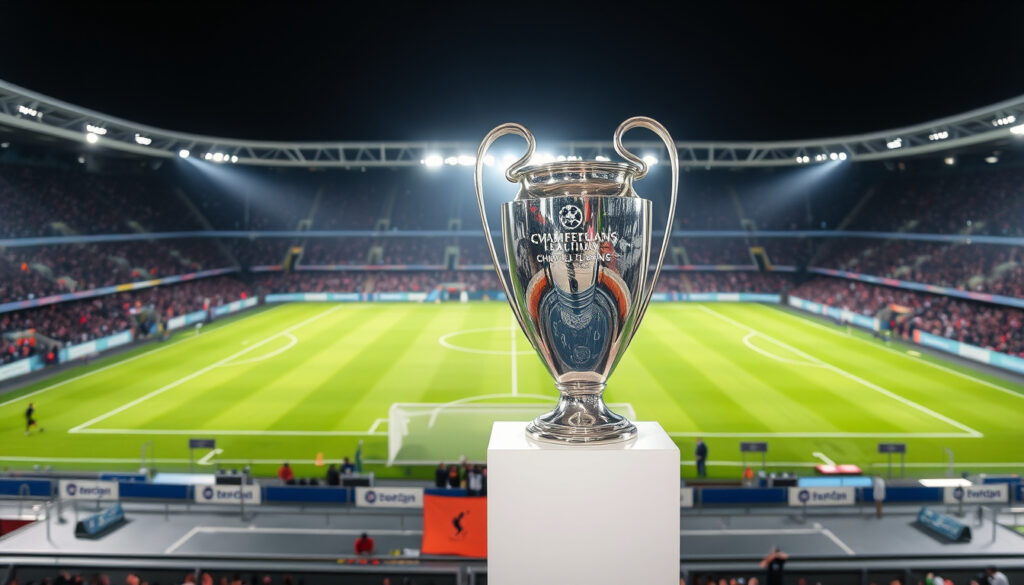
UEFA Women’s Champions League – Complete Guide to Format and History
UEFA Women’s Champions League: The Ultimate Guide
The UEFA Women’s Champions League stands as Europe’s premier club competition in women’s football, showcasing the continent’s elite teams competing annually for continental supremacy. The tournament has evolved significantly since its inception, with structural changes shaping how teams qualify, compete, and ultimately claim the trophy.
From its origins as the UEFA Women’s Cup in 2001 to its rebranding and format transformations over the decades, the competition has grown into a globally recognized sporting event. The 2024/25 season marked a transitional moment, serving as the final edition under the traditional 16-team group stage format before a revolutionary new structure takes center stage.
This guide provides comprehensive coverage of the competition’s format, qualifying procedures, historical context, and what fans can expect as the tournament continues to expand its reach and competitive intensity across European football.
What is the UEFA Women’s Champions League?
The UEFA Women’s Champions League represents the highest tier of club competition in European women’s football, organized annually by the Union of European Football Associations. The tournament brings together the top-performing clubs from across UEFA’s 55 member associations, determined by their domestic league performances and coefficient rankings.
The competition originally launched as the UEFA Women’s Cup in the 2001/02 season, featuring just 33 clubs in its inaugural edition. A significant rebranding occurred in 2009, and the tournament adopted its current Champions League designation from the 2009/10 season onward. The competition has since grown to accommodate more teams and deliver enhanced viewing experiences for audiences worldwide.
Barcelona enter the 2024/25 campaign as defending champions, having secured their third consecutive title. The Spanish giants have established themselves as the dominant force in recent editions, though Lyon of France hold the record for most overall titles with eight championships.
Key facts about the competition
- Inaugural season began in 2001/02 under the UEFA Women’s Cup name
- Most successful club: Olympique Lyonnais with 8 titles
- Current defending champions Barcelona have won 3 consecutive editions
- 2024/25 marked the 24th edition overall, 16th under the Champions League name
- The tournament operates alongside a new UEFA Women’s Europa Cup introduced from 2025/26
- Barcelona secured automatic qualification to the 2026 FIFA Women’s Champions Cup semi-finals
- The competition awards entries to the FIFA Women’s Club World Cup for winners
Competition snapshot
| Fact | Detail |
|---|---|
| Inaugural Year | 2001/02 season |
| Most Titles | Lyon (8 championships) |
| 2024/25 Season Start | Qualifying rounds September 2024; Group stage October 2024 |
| 2024/25 Final Date | 24 May 2025 |
| Current Champion | Barcelona (2023/24) |
| Format Transition | 2025/26 introduces 18-team league phase |
| Title Holders Qualification | Auto-qualified via domestic league position |
How does the UEFA Women’s Champions League format work?
The competition structure has undergone significant evolution, with the 2024/25 season representing the conclusion of an era under the traditional format. Understanding how teams navigate from initial qualification through to the final requires examining both the outgoing and incoming structures.
2024/25 format structure
The 2024/25 UEFA Women’s Champions League featured 16 teams competing in a traditional group stage format, replacing the earlier knockout qualifiers that preceded the group phase. Teams were divided into four groups of four, with the top two finishers from each group advancing directly to the knockout rounds beginning at the quarter-final stage.
Qualification to the group stage followed a coefficient-based system determined by UEFA rankings. Associations ranked 1 through 6, including England, Spain, France, and Germany, received three qualification spots each. Associations ranked 7 through 16 received two spots, while all remaining associations received one representative. Title holders Barcelona automatically qualified through their domestic league position.
The qualifying rounds themselves operated through two distinct paths. The Champions Path included 43 champions from lower-ranked associations competing in mini-tournaments. The League Path featured runners-up and third-placed teams from associations with multiple qualification spots, competing through two-legged knockout ties.
2025/26 and beyond: The new league phase
From the 2025/26 season onward, the competition transforms with an 18-team single league phase replacing the group stage structure. Each participating team plays six matches total, facing three home and three away fixtures against opponents drawn from three pots based on UEFA coefficients. Points are awarded at the standard rate: three for a win, one for a draw.
The transition from 16-team groups to an 18-team league phase represents the most significant structural overhaul in the competition’s history, promising increased competitive drama and more diverse matchups across the continent.
The league phase concludes with direct qualification paths for the strongest performers. Teams finishing in the top four positions secure automatic quarter-final berths. Those placed between fifth and twelfth enter two-legged play-offs against each other. Teams finishing thirteenth through eighteenth face elimination from European competition for that season.
Quarter-final pairings see top-four seeds hosting return legs against play-off round winners, followed by standard knockout progression through semi-finals and the final. The 2025/26 league phase delivered 181 goals across 54 matches, averaging 3.35 goals per game, with 54 percent of matches decided by a single goal or ending in draws, demonstrating the format’s competitive intensity through to the final matchday.
Qualification pathways explained
Understanding how clubs reach the Champions League requires examining the qualification hierarchy. National associations receive allocation spots based on their UEFA coefficient rankings, determined by the collective performance of their clubs in European competitions over preceding seasons.
Within each association, domestic league positions determine which clubs represent their country. Champions from top-ranked associations with three spots enter directly into the group stage or league phase. Champions from lower-ranked associations must navigate qualifying rounds. Runners-up and additional placings enter through parallel pathways depending on their association’s ranking and available spots.
Draw procedures
The group stage draw for the 2024/25 season took place on 27 September 2024, determining the four groups and match schedules. Knockout draws occurred on 7 February 2025, establishing quarter-final and potential semi-final pairings based on group position and seeded matchups.
The new format introduces pot-based fixture draws that create unique schedules for all 18 participating teams, adding strategic complexity as clubs balance domestic and European commitments throughout the campaign.
Who are the current UEFA Women’s Champions League champions?
Barcelona enter the 2024/25 season as the defending champions, having secured their third consecutive title in what has become a remarkable era of dominance for the Catalan club. The Spanish champions have claimed four titles overall, positioning themselves among the competition’s most successful clubs alongside Lyon of France.
Recent champions and title history
The competition’s history reveals several dominant eras. Olympique Lyonnais established themselves as the competition’s most successful club, accumulating eight championship titles across multiple seasons. The French club’s run of success spanned from 2010 through 2022, interrupted only occasionally by challengers who managed to break their grip on the trophy.
Barcelona’s recent triumph marked their fourth overall title and third consecutive championship, signaling a shift in European dominance toward the Spanish league. The club’s success has been built on retaining key international talent and developing homegrown players who have become central figures in the squad’s achievements.
Past winners of the competition include teams from England, Germany, Sweden, Russia, France, and Spain, reflecting the geographical spread of women’s football development across Europe. The tournament’s expansion and professionalization have raised overall competitive standards, making successive titles increasingly difficult to achieve.
Title holders’ pathway
Champions maintain their status through domestic league performance rather than receiving automatic tournament entry. This means defending champions must qualify by securing their domestic league position, ensuring that only clubs performing at the highest national level return to defend their European title.
Barcelona’s position as title holders and domestic league leaders ensures their continued presence in the competition, with their success earning additional prestigious entries. The 2023/24 champions secured automatic qualification to the 2025/26 league phase, qualification to the 2026 FIFA Women’s Champions Cup semi-finals, and entry to the 2028 FIFA Women’s Club World Cup.
Most successful clubs in competition history
Lyon leads all clubs with eight UEFA Women’s Champions League titles, establishing an unmatched record of dominance during their peak years. The French club’s success built on consistent investment in squad depth, world-class facilities, and the ability to attract and retain elite international players.
Barcelona’s four titles represent the second-highest tally, all achieved within the past decade. The club’s trajectory from contenders to dominant force illustrates how sustained investment and strategic squad building can transform a club’s European prospects.
Wolfsburg of Germany claimed two titles during Lyon’s dominant period, demonstrating that the competition remained competitive despite French supremacy. Frankfurt and Turbine Potsdam have also claimed the trophy in earlier editions, reflecting the German league’s historical strength in women’s football.
When is the UEFA Women’s Champions League 2024/25 final?
The 2024/25 UEFA Women’s Champions League final took place on 24 May 2025 at Estádio José Alvalade in Lisbon, Portugal. The venue, home to Sporting CP, provided a fitting stage for European football’s premier women’s club encounter, offering modern facilities and substantial capacity for what promised to be a memorable occasion.
Key dates for the 2024/25 season
The season timeline began with the qualifying round draws and matches determining which clubs would join the directly-qualified teams in the group stage. The qualifying process unfolded across two distinct rounds, each serving different categories of clubs based on their domestic league positions and association rankings.
The 2024/25 campaign ran from qualifying rounds in September 2024 through to the final on 24 May 2025, spanning approximately eight months of competitive football across qualifying, group stage, and knockout phases.
Qualifying Round 1 featured mini-tournaments with the draw conducted on 5 July 2024. Semi-final matches occurred on 4 September 2024, with finals concluding on 7 September 2024. Qualifying Round 2 saw its draw on 9 September 2024, with first and second legs played across 18-19 September and 25-26 September respectively.
The group stage draw occurred on 27 September 2024, with matchdays scheduled across six dates between 8 October and 18 December 2024. This six-match sequence determined which teams would progress to the knockout phase and how they would be seeded for subsequent draws.
Knockout phase schedule
The knockout rounds began with the quarter-final and semi-final draw on 7 February 2025, establishing the bracket structure and determining potential matchups. Quarter-final first legs took place on 18-19 March 2025, with return legs scheduled for 26-27 March 2025.
Semi-final first legs occurred on 19-20 April 2025, with return legs following on 26-27 April 2025. This sequence built toward the season’s climax at Estádio José Alvalade, where the final on 24 May 2025 determined the champion.
Where to find results and standings
Specific match results and updated standings throughout the season are available through UEFA’s official standings page, which provides live updates, match reports, and comprehensive competition data. The official website maintains current information on fixtures, results, statistics, and team performances throughout each round of the competition.
Fans seeking broadcast information, match highlights, and detailed match reports should consult UEFA’s digital platforms, which provide extensive coverage across multiple languages and formats. Regional broadcast partners vary by territory, with UEFA working alongside national broadcasters to deliver coverage across Europe and internationally.
UEFA Women’s Champions League timeline
The competition’s history spans over two decades of evolution, growth, and increasing professionalization in European women’s football. From its modest beginnings to its current status as a major sporting event, the tournament reflects broader developments in the women’s game across the continent.
- 2001/02: Inaugural UEFA Women’s Cup launches with 33 clubs competing in knockout format across multiple rounds
- 2009/10: Tournament rebranded as UEFA Women’s Champions League, elevating the competition’s profile and commercial appeal
- 2019/20: Season disrupted by the COVID-19 pandemic; final tournament held as isolated matches in August 2020
- 2021: Major format change introduces 16-team group stage, replacing the previous knockout qualifying structure
- 2021-2024: Barcelona establishes dominance, winning three consecutive titles and four overall
- 2024: Final under traditional format announced; planning begins for structural transformation
- 2025: 24th edition concludes at Estádio José Alvalade, Lisbon, marking the end of the group stage era
- 2025/26: New 18-team league phase format launches, introducing single-table competition with direct and play-off qualification paths
- 2026: Final scheduled for Ullevaal Stadion, Oslo, continuing the expansion of the competition’s geographical reach
What we know and what remains unclear
Transparency about the boundaries between confirmed information and outstanding questions helps readers understand the current state of knowledge surrounding the competition. Several aspects of the UEFA Women’s Champions League are well-documented, while others remain subject to confirmation or ongoing development.
| Established Information | Information That Remains Unclear |
|---|---|
| 2024/25 format details and structure | 2024/25 competition winner (season concluded post-2026) |
| 2025/26 league phase format and qualification rules | Exact qualifying teams for future editions (pre-draw) |
| Historical winners through 2023/24 season | Specific broadcast arrangements by region |
| Draw procedures and timeline for each season | Prize money breakdown and distribution amounts |
| Final venues through 2026 | 2024/25 top scorers and individual awards |
| Qualification pathways and coefficient systems | Long-term format evolution beyond 2025/26 |
| Competition history and records through 2023/24 | Detailed match results and standings (verify current) |
While the 2025/26 season statistics demonstrate the new format’s competitive success, specific details regarding prize money structures and distribution continue to require verification from official sources. Similarly, broadcast arrangements vary by territory and change across seasons, necessitating consultation of local listings for accurate viewing information.
The broader context of women’s football growth
The UEFA Women’s Champions League exists within a rapidly evolving landscape of professional women’s football across Europe. The competition’s growth mirrors broader developments including increased investment, improved infrastructure, rising attendance figures, and expanding media coverage that have transformed the women’s game over the past decade.
Format changes introduced from 2025/26 reflect UEFA’s strategic vision for enhancing competitive balance and maximizing drama throughout the season. The new league phase structure, featuring 18 teams and direct qualification paths, aims to deliver more meaningful matches while maintaining accessibility for emerging clubs from developing football nations.
The introduction of the parallel UEFA Women’s Europa Cup from the 2025/26 season creates additional pathways for clubs, with 13 direct entrants including third-placers from associations ranked 8 through 13, plus qualifiers fed from Champions League dropouts. Winners of this secondary competition earn entry into the following season’s Champions League qualifying round three, maintaining stakes throughout European club football’s hierarchy.
International competitions increasingly intersect with domestic club football, as evidenced by Barcelona’s qualification for the 2026 FIFA Women’s Champions Cup semi-finals and 2028 FIFA Women’s Club World Cup. These connections elevate the stakes of European competition and create additional incentives for clubs pursuing continental success.
The competition’s evolution continues to be shaped by commercial developments, broadcasting agreements, and the growing appetite for women’s football among fans and sponsors. As the sport professionalizes further, the Champions League serves as both a showcase for elite performance and a driver of broader development across participating nations and clubs.
Understanding the competition through official sources
Information about the UEFA Women’s Champions League flows from multiple authoritative sources, each contributing distinct perspectives and coverage approaches. Understanding these sources helps readers navigate the landscape of available information and assess the credibility of different accounts.
“The new format delivers drama, quality, and rising competitiveness across every matchday of the league phase.”
— UEFA Communications on the 2025/26 format implementation
UEFA’s official platforms provide the most authoritative coverage, including the official competition website and UEFA’s digital hub. These sources maintain current standings, fixtures, results, and official announcements regarding format changes, draw procedures, and competition regulations.
Encyclopedia sources like Wikipedia’s competition article offer comprehensive historical coverage, detailed format explanations, and extensive citations to official sources. These resources prove valuable for understanding the competition’s evolution and verifying factual claims against primary documentation.
Sports journalism outlets provide match coverage, analysis, and contextual reporting that complements official sources. ESPN’s format explanation coverage offers accessible explanations of structural changes and their implications for competition dynamics.
Summary
The UEFA Women’s Champions League continues to evolve as one of European football’s most compelling competitions, combining rich history with ongoing innovation in format and structure. The 2024/25 season concluded a chapter defined by the traditional group stage format, while the 2025/26 campaign introduces an ambitious new league phase featuring 18 teams competing across six matchdays for direct quarter-final qualification.
Barcelona’s dominance in recent editions underscores the competitive challenges facing ambitious clubs, while Lyon’s historical record of eight titles demonstrates that sustained excellence remains possible for committed organizations. The competition’s growth trajectory reflects broader developments in women’s football, including increased investment, improved standards, and expanding global audiences.
Fans seeking the latest information should consult official UEFA channels for current standings, fixtures, and broadcast details, while understanding that some aspects including specific prize money figures and regional viewing options require verification through appropriate local sources. The competition’s future promises continued evolution as European women’s football pursues its ambitions for growth and excellence.
Frequently asked questions
Who has won the UEFA Women’s Champions League the most times?
Olympique Lyonnais of France holds the record with eight UEFA Women’s Champions League titles, achieved primarily during their dominant period from 2010 through 2022. Barcelona follows with four titles, all won since 2021.
What is the prize money for the UEFA Women’s Champions League?
Specific prize money figures for the UEFA Women’s Champions League are not publicly detailed in available sources. Official UEFA announcements and competition documentation would provide the most accurate information regarding financial distributions to participating clubs.
How many teams compete in the UEFA Women’s Champions League?
The 2024/25 season featured 16 teams in the group stage. From 2025/26 onward, the competition expands to 18 teams competing in a single league phase format before knockout rounds begin.
Where will future finals be held?
The 2025/26 final is scheduled for Ullevaal Stadion in Oslo, Norway. Specific venues for subsequent editions are announced by UEFA as host cities are confirmed.
What happens to teams eliminated from the Champions League?
From 2025/26, teams finishing 13th through 18th in the league phase are eliminated from European competition for that season. Eliminated clubs from the Champions League qualifying rounds may feed into the new UEFA Women’s Europa Cup secondary pathway.
How can I watch UEFA Women’s Champions League matches?
Broadcast arrangements vary by territory. UEFA.com typically lists official streaming partners and broadcast information. Regional rights holders provide television and digital coverage across multiple platforms.
What is the UEFA Women’s Europa Cup?
The UEFA Women’s Europa Cup debuts alongside the Champions League from 2025/26, featuring 13 direct entrants plus qualifiers fed from Champions League dropouts. Winners earn entry to the following season’s Champions League qualifying round three.
More related posts
 American Pit Bull Terrier – Guide to Size, Temperament, Care
 Sky Free Contact Number 0800 Opening Times – Verified Numbers & Hours
 Emilia Fox – From Pride and Prejudice to Silent Witness
 Appliances Direct Discount Code – Save on Premium Brands
 Cast of Sneaky Pete – Full Cast Guide for All 3 Seasons
 How Old Is Amanda Holden – Age, Career and Family Facts 2026
 Norman Reedus – Age, Net Worth, Family and Career 2025
 JJ Gabriel – Age, Nationality and Rise at Manchester United
