7 Wonders of the World – Complete List, History and Facts
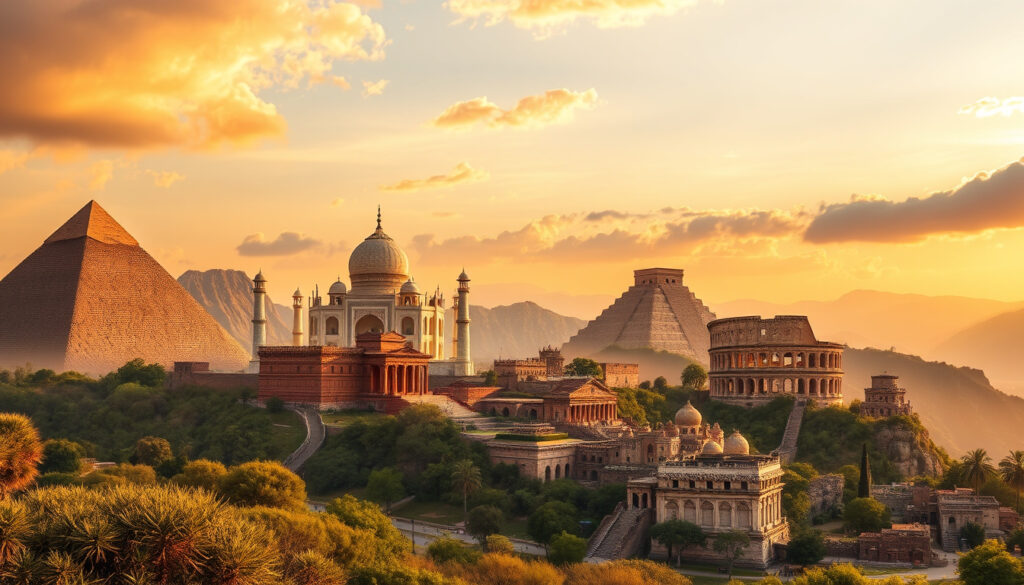
The New 7 Wonders of the World represent a carefully curated selection of iconic landmarks chosen through one of the largest global polls ever conducted. In 2007, over 100 million votes from people worldwide determined which modern structures would earn this prestigious distinction. Unlike the ancient list compiled by Greek scholars, these monuments span continents and eras, from Roman amphitheaters to Inca mountain citadels.
The campaign attracted both acclaim and controversy. While supporters praised its effort to engage global audiences in celebrating architectural achievement, critics—including UNESCO—questioned its commercial approach and voting methodology. Nevertheless, the selected sites continue to draw millions of visitors annually, cementing their status as essential destinations for travelers and history enthusiasts alike.
This guide presents a comprehensive overview of each wonder, compares the new list with its ancient predecessor, explores related campaigns for natural wonders, and addresses common questions about these remarkable landmarks.
What Are the New 7 Wonders of the World?
The winners, announced on July 7, 2007, in Lisbon, Portugal, emerged from a pool of 177 initial nominations that was later narrowed to 21 finalists. A panel including former UNESCO president Federico Mayor reviewed the candidates before the final public vote determined the winners. The resulting list includes sites from Asia, South America, Europe, the Middle East, and North America.
China • 1368 AD
Jordan • 40 AD
India • 1643 AD
Mexico • 600 AD
- Over 100 million votes were cast online and via SMS during the campaign, making it one of the largest public polls in history.
- The Pyramids of Giza received honorary status after Egypt threatened to withdraw from the process when the site failed to make the final seven.
- Christ the Redeemer in Rio de Janeiro stands 38 meters tall atop Corcovado Mountain, its outstretched arms symbolizing peace.
- Chichén Itzá served as a major Mayan citadel featuring the iconic stepped pyramid known as El Castillo.
- The campaign began in 2000 during the Sydney Olympics, organized by the Swiss-based New7Wonders Foundation.
- UNESCO publicly distanced itself from the initiative, citing concerns about commercialization.
- Only one ancient wonder—the Pyramids of Giza—still stands today.
| Wonder | Location | Year Built |
|---|---|---|
| Great Wall of China | China | 1368 AD |
| Petra | Ma’an, Jordan | 40 AD |
| Taj Mahal | Agra, India | 1643 AD |
| Chichén Itzá | Yucatán, Mexico | 600 AD |
| Machu Picchu | Cuzco Region, Peru | 1450 AD |
| Christ the Redeemer | Rio de Janeiro, Brazil | 1931 |
| Colosseum | Rome, Italy | 80 AD |
| Pyramids of Giza (honorary) | Giza, Egypt | 2560 BC |
Original 7 Wonders vs New 7 Wonders: Key Differences
The ancient list of Seven Wonders was compiled by Greek writers, notably Antipater of Sidon, around 120 BC. Unlike the modern selection process, these monuments were identified by scholars rather than through public voting. The original list focused predominantly on Mediterranean achievements, with only one site—the Pyramids of Giza—remaining standing today.
Ancient Wonders That No Longer Exist
Of the original seven wonders, six have been destroyed over the centuries. The Lighthouse of Alexandria, once standing among the tallest structures in the ancient world, fell victim to earthquakes. The Statue of Zeus at Olympia, crafted by the renowned sculptor Phidias, was destroyed by fire. The Temple of Artemis at Ephesus burned down and was rebuilt twice before eventually disappearing entirely.
The Hanging Gardens of Babylon present a particular mystery—many historians now believe they may never have existed as described, despite being listed among the original seven wonders.
| Ancient Wonder | Current Status |
|---|---|
| Pyramids of Giza | Still standing (honorary status in new list) |
| Lighthouse of Alexandria | Destroyed by earthquakes |
| Hanging Gardens of Babylon | Likely never existed; destroyed if real |
| Statue of Zeus at Olympia | Destroyed by fire |
| Temple of Artemis at Ephesus | Destroyed; rebuilt twice before disappearing |
| Colossus of Rhodes | Destroyed by earthquake |
| Mausoleum at Halicarnassus | Destroyed by successive earthquakes |
Modern Selection Criteria
The new list takes a markedly different approach. Instead of focusing on Mediterranean engineering feats, the modern wonders represent diverse civilizations from across the globe. The selection process emphasized global participation, allowing anyone with internet or SMS access to cast a vote. This democratized approach aimed to create a list reflecting contemporary values of cultural diversity and international collaboration.
Critics pointed to potential vote manipulation, including claims of bloc voting by certain countries. Brazil faced allegations of mobilizing voters specifically for Christ the Redeemer, while countries with heavily promoted campaigns may have enjoyed unfair advantages in the final tally.
What Are the 7 Natural Wonders of the World?
In 2011, the New7Wonders Foundation launched a separate campaign to identify the New 7 Wonders of Nature. This initiative sought to highlight exceptional natural landmarks across the planet, following the same public-voting methodology used for the architectural wonders. The winners represent diverse ecosystems from multiple continents.
The Seven Natural Wonders
The campaign recognized seven natural sites for their outstanding universal value. The Amazon Rainforest in South America encompasses the largest tropical rainforest on Earth, home to an unparalleled diversity of species. Iguazu Falls, shared between Argentina and Brazil, features over 275 waterfalls cascading through a dramatic gorge.
Halong Bay in Vietnam displays thousands of limestone karsts rising from emerald waters, creating one of the most photographed landscapes in Southeast Asia. Jeju Island, South Korea’s volcanic paradise, offers unique geological formations including lava tubes and crater lakes. Komodo in Indonesia protects the habitat of the legendary Komodo dragon, the world’s largest living lizard.
Unlike the architectural wonders, this natural list remains unofficial with many competing definitions of “natural wonders” existing across various organizations and publications.
Puerto Princesa Underground River in the Philippines navigates through one of the longest underground river systems in the world within a stunning limestone karst landscape. Table Mountain in South Africa towers above Cape Town with its distinctive flat-topped silhouette and exceptional biodiversity.
Where Are the 7 Wonders Located?
The New 7 Wonders span six countries across five continents, offering travelers a remarkable geographic diversity of destinations. Each site represents distinct architectural traditions and cultural histories, from ancient carved facades to Renaissance-era structures.
Sites Across Continents
The Great Wall of China snakes through northern China, with the Mutianyu section offering visitors well-preserved segments with restored watchtowers. The wall’s serpentine path traverses mountains, plateaus, and grasslands across thousands of kilometers, representing one of humanity’s most ambitious construction projects.
Petra lies hidden within rose-red canyons in southern Jordan, its most famous structure—the Treasury—carved directly into sandstone cliffs. The site served as the capital of the Nabataean Kingdom and remained unknown to Western visitors until 1812. Today, visitors enter through the narrow Siq passage, emerging to encounter the monumental carved facade.
Most of these sites welcome millions of visitors annually. The Taj Mahal alone receives approximately 8 million visitors per year, prompting timed entry slots and conservation efforts to protect the marble structure from environmental damage.
The Taj Mahal rises on the banks of the Yamuna River in Agra, India, its gleaming white marble dome visible from considerable distances. Built by Emperor Shah Jahan as a mausoleum for his beloved wife Mumtaz Mahal, the structure combines elements from Islamic, Persian, and Indian architectural traditions.
Wonders of the World in Europe
Europe’s representation comes through the Colosseum in Rome, Italy. This ancient amphitheater once hosted gladiatorial contests and public spectacles, accommodating up to 80,000 spectators in its elliptical structure. Today, the partially ruined arena offers visitors a glimpse into Roman engineering prowess and entertainment culture.
The Americas contribute two wonders: Chichén Itzá on the Yucatán Peninsula of Mexico and Machu Picchu in Peru’s Cuzco Region. Chichén Itzá’s stepped El Castillo pyramid demonstrates the Maya’s sophisticated understanding of astronomy, with shadows creating a serpent’s body during equinoxes. Machu Picchu perches at 2,430 meters above sea level, its terraced ruins revealing Incan architectural precision.
Several sites face ongoing preservation challenges. Machu Picchu’s delicate stone structures experience pressure from increasing visitor numbers, while the Great Wall suffers from sections being stripped of stones by nearby residents. Organizations like UNESCO’s World Heritage program work with local authorities to implement sustainable tourism strategies.
Christ the Redeemer overlooks Rio de Janeiro from the 700-meter summit of Corcovado Mountain. The Art Deco statue, completed in 1931, measures 38 meters tall including its pedestal, with arms stretching 28 meters wide. Constructed from soapstone and reinforced concrete, the statue has endured lightning strikes and weather damage over the decades.
Timeline: The 2007 Campaign
Understanding the context behind the New 7 Wonders selection requires examining the campaign’s evolution over several years. The initiative followed a deliberate progression from conception through global implementation.
- — Campaign launches during the Sydney Olympics, organized by Swiss-based company selected to manage the project.
- — Nomination period narrows the list from 177 candidates to 21 finalists through preliminary rounds.
- — Final voting phase conducted through the New7Wonders website and SMS platforms worldwide.
- — Winners officially announced in Lisbon during a widely publicized ceremony designated “7 Wonders Day.”
- — Follow-up campaigns launch, including efforts to identify natural wonders and future city landmarks.
- — New7Wonders Foundation continues initiatives with campaigns such as “7 Wonders of Future Cities.”
Distinguishing Fact from Uncertainty
While the New 7 Wonders list enjoys widespread recognition, several aspects remain subjects of ongoing debate among historians, preservation organizations, and travel experts. Wikipedia’s comprehensive coverage documents both the established facts and the controversies surrounding the selection process.
| Established Information | Uncertain or Contested Areas |
|---|---|
| Seven sites were selected as winners in July 2007 | Whether voting methodologies truly reflected global preference |
| Over 100 million votes were cast through online and SMS channels | Claims of organized bloc voting affecting specific outcomes |
| The Pyramids of Giza received honorary status after Egypt’s formal objection | Whether the honorary designation carries formal recognition beyond the campaign itself |
| UNESCO publicly distanced itself from the initiative | The practical impact of this distinction on sites’ preservation efforts or tourism |
| Petra hosts annual celebrations forming a human “7” shape | Long-term sustainability of such events given commercial pressures |
Why These Sites Matter
The selection of these particular sites reflects broader cultural and economic currents operating at the turn of the 21st century. By choosing monuments from outside Europe—the region dominating the original ancient list—the campaign acknowledged shifting global dynamics and the rising importance of emerging economies in cultural discourse.
Tourism impacts have been substantial. Sites like Machu Picchu and Chichén Itzá experienced significant visitor growth following the announcement, prompting governments to implement conservation measures and visitor caps. The economic benefits must be balanced against concerns about overtourism threatening these irreplaceable landmarks.
The campaign also sparked interest in preservation efforts beyond those already undertaken by UNESCO. While the foundation’s selection process attracted criticism for its commercial undertones, the resulting attention brought renewed focus to maintaining these sites for future generations.
Additional Resources and Sources
Several organizations maintain authoritative information about these landmarks. Britannica’s encyclopedia coverage provides regular updates and editorial standards, while UNESCO’s World Heritage Centre tracks designated sites and their conservation status. Individual site management authorities provide visitor information and historical documentation for those planning trips.
The New7Wonders Foundation aimed to engage global audiences in celebrating modern architectural marvels, creating a list that reflects contemporary values of cultural diversity and international collaboration.
— Campaign documentation, 2007
Academic sources offer deeper historical context. Wikipedia’s comprehensive article includes extensive citations from primary sources and peer-reviewed publications. Travel publications from outlets like BBC Bitesize offer accessible educational content suitable for younger audiences and those seeking condensed introductions to the subject matter.
Summary and Key Takeaways
The New 7 Wonders of the World represent one of the most ambitious public engagement exercises in cultural history. Whether viewed as legitimate recognition or clever marketing, the initiative succeeded in drawing attention to remarkable architectural achievements spanning multiple continents and millennia.
For travelers planning visits, each site offers distinct experiences—from wandering through Petra’s carved canyons to standing beneath Christ the Redeemer’s welcoming embrace. For historians, the contrast with the ancient list raises questions about how cultural significance gets determined and whose voices matter in that process.
The ongoing campaigns and continued interest suggest these sites will remain cultural touchstones for decades to come. Whether through physical visits or virtual tours, millions continue to engage with these monuments, ensuring their place in global consciousness.
For those interested in broader political and economic context affecting travelers and residents, the implications of international recognition on local communities merit consideration alongside the architectural marvels themselves.
What is the 7 Wonders board game?
The “7 Wonders” board game by Asmodee draws inspiration from ancient civilizations rather than the 2007 campaign. Players build structures and cities using card-drafting mechanics over three ages, competing to construct the most impressive civilization.
Are there 7 Wonders of the World in Hindi resources?
Indian media outlets and educational platforms provide Hindi-language resources about the wonders, reflecting the country’s connection to the Taj Mahal. These resources often emphasize the Indian landmark while providing broader context.
What is the 7 Wonders of the World exhibition?
Physical exhibitions linked to the campaign primarily consisted of announcement events, such as the July 2007 ceremony in Lisbon. Some sites, including Petra, continue annual celebrations on “7 Wonders Day” with live performances and human formations.
How many wonders of the world are there total?
Counting both ancient and modern lists, travelers can visit approximately 14 sites—seven ancient wonders (with only the Pyramids still standing) plus the seven modern wonders and Giza’s honorary designation. Natural wonders add another seven sites.
Which wonder is the oldest?
The Pyramids of Giza, built around 2560 BC, predate all other wonders by millennia. Among the new seven, Petra and the Colosseum represent the oldest structures, built around 40 AD and 80 AD respectively.
Can I visit all seven wonders in one trip?
Visiting all seven requires substantial planning and spans multiple continents. Most travelers focus on one or two regions per journey. The Colosseum can be combined with stops in Asia or the Middle East for efficient itineraries.
Which wonders are UNESCO World Heritage Sites?
Most of the selected sites hold World Heritage designation: Machu Picchu (1983), Colosseum (1980), Petra (1985), and the Taj Mahal (1983). This recognition carries preservation obligations and international support.
Why was the Eiffel Tower not selected?
The Eiffel Tower reached the 21-finalist stage but did not make the final seven. Critics suggested newer structures faced disadvantages against ancient monuments with deeper historical roots. The tower remains one of France’s most visited landmarks regardless.
More related posts
 Chris Briney – Age, Height, Parents and Girlfriend Revealed
 The Range St Albans – Opening Hours, Address and Guide
 Real Madrid vs Arsenal – Full Head-to-Head Record and 2025 Result
 Amy Lynn Bradley – Disappearance and New Leads in 2025
 Dinner Ideas for Family – Quick Healthy Meals on a Budget
 Toy Store Near Me – UK Chains Locations & Opening Times
 12 Stones in KG – Exact Conversion and Reference Chart
 M and S Clothes – Fit, Quality and History Guide
