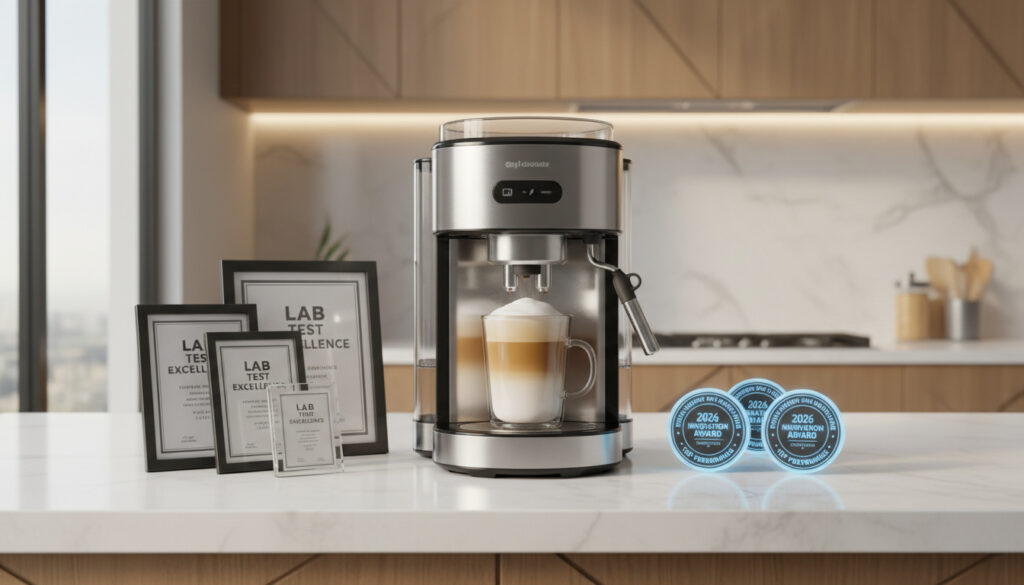
Coffee Machine with Milk Frother – Top Lab-Tested Picks 2026
The morning ritual of purchasing café-quality lattes has shifted significantly toward kitchen countertops. Modern appliances now integrate precision milk frothing with various brewing methods, eliminating the need for separate equipment or daily café visits, much like the streamlined approach found in Mary Berry Yorkshire Pudding – Classic Recipe Made Easy. Selecting the optimal system requires understanding the distinction between automatic carafe systems that prioritize convenience and manual steam wands that offer tactile control over microfoam texture.
Current laboratory evaluations from consumer testing organizations reveal significant performance variations across price tiers. While premium bean-to-cup systems deliver one-touch operation, combination machines provide versatility for households with diverse coffee preferences. The following analysis synthesizes controlled testing data, expert video reviews, and manufacturer specifications to identify which configurations genuinely deliver barista-standard milk texture.
What Is the Best Coffee Machine with Milk Frother?
Good Housekeeping identifies the De’Longhi All-in-One Combination Coffee Maker & Espresso Machine as the top overall selection for 2026, citing its dual heating capability that enables simultaneous drip coffee brewing and espresso preparation with a built-in milk frother. Laboratory testing confirms this model produces lattes, cappuccinos, and traditional drip coffee without requiring separate appliances.
Alternative recommendations vary by specific use case. The KitchenAid KF8 dominates the superautomatic bean-to-cup category with an intuitive touchscreen interface and refrigerator-storable milk container, while specialist evaluations highlight the Breville Bambino Plus and Nespresso Vertuo Lattissima for users prioritizing milk-based beverages. The De’Longhi Eletta Explore accommodates the widest range of milk beverages through interchangeable hot and cold frothing systems, and the Ninja Luxe Café Pro distinguishes itself with tailored frothing settings for dairy, oat, and almond milks.
Pod Machines
Price Range: $150–$400
Frother Type: Separate dispenser or in-cup
Ease of Use: Minimal learning curve
Best For: Speed and consistency
Bean-to-Cup
Price Range: $800–$2,000+
Frother Type: Integrated carafe
Ease of Use: One-touch operation
Best For: Fresh grinding with automation
Espresso with Manual Frother
Price Range: $300–$1,500
Frother Type: Traditional steam wand
Ease of Use: Requires technique
Best For: Latte art and texture control
Super-Automatic
Price Range: $600–$2,500
Frother Type: Auto steam wand or carafe
Ease of Use: Programmable interfaces
Best For: High-volume milk drinks
Key Performance Insights
- Dual heating systems eliminate sequential waiting between espresso extraction and milk steaming.
- Built-in carafe frothers store conveniently in refrigerators, preserving milk freshness between uses.
- Automatic frothing systems produce consistent foam but limit the free-pour latte art possible with manual wands.
- Touchscreen interfaces with step-by-step guides reduce operational errors for novice users.
- Plant milk compatibility varies significantly; certain models handle oat and almond formulations better than others.
- Premium models with hot and cold frothing capabilities justify higher costs for households consuming multiple milk drink styles daily.
- Compact dimensions often correlate with smaller water reservoirs, requiring more frequent refilling during high-use periods.
Technical Specifications Comparison
| Feature | Entry-Level | Mid-Range | Premium |
|---|---|---|---|
| Price Range | Under $300 | $300–$800 | $800+ |
| Frother Mechanism | Panarello wand or in-cup | Auto carafe or basic wand | Programmable auto wands, dual systems |
| Water Capacity | 40–60 oz | 60–74 oz | 74 oz+ |
| Heating System | Single boiler | Thermoblock | Dual heating/boilers |
| Interface | Buttons/dials | LCD screens | 3.5+ inch touchscreens |
| Milk Temperature | Hot only | Hot only | Hot and cold options |
| Milk Type Settings | None | Limited profiles | Dairy, oat, almond customization |
| Cleaning Cycle | Manual rinse | Auto-rinse programs | Automated deep cleaning |
| Pressure (Bars) | 9–15 | 15–19 | 19 |
| Dimensions | Compact | Medium footprint | Substantial counter space |
How Do I Choose a Coffee Machine with Milk Frother?
Selection criteria must align with specific consumption patterns rather than marketing specifications. Video analysis of operational workflows indicates that users preparing multiple milk drinks daily require different features than those making occasional weekend cappuccinos.
Mapping Usage Patterns
Households consuming lattes or cappuccinos daily should prioritize automatic frothing systems, either through superautomatic bean-to-cup machines or pod-based solutions. These configurations eliminate the manual technique required for steam wands while maintaining consistency. Conversely, espresso purists who view milk texturing as a craft should select semi-automatic machines with professional-grade wands, accepting the learning curve in exchange for superior microfoam control.
Skill Level Considerations
Beginners benefit from button-push automatics such as the KitchenAid KF8, which guides users through touchscreen prompts. Interface evaluations confirm these systems reduce error rates during the learning phase. Experienced users typically prefer semi-automatic machines like the Breville Bambino Plus, which offer customizable temperature and foam levels through manual intervention.
Spatial and Financial Constraints
Compact options such as the De’Longhi Dedica or Nespresso systems accommodate limited counter space, though they may require more frequent water refills. Long-term cost analysis suggests that premium models from Jura or De’Longhi justify their expense through durability and café-cost savings for daily users, while occasional drinkers should consider mid-range De’Longhi or Breville models that balance features with price.
Priority should be given to machines offering adjustable milk temperature and foam density settings. The Jura S8 and Breville Oracle Jet provide granular control over these variables, allowing calibration to specific milk types including oat and almond alternatives. Models lacking these adjustments may produce inconsistent results when switching between dairy and plant-based options.
Milk Compatibility Requirements
Not all frothers handle plant-based milks effectively. Testing protocols indicate that Lavazza Classy Plus systems excel with non-dairy formulations, while some carafe-based systems struggle to achieve adequate foam structure with low-fat or alternative milks. Users committed to plant-based diets should verify compatibility through specific model testing rather than assuming universal functionality.
What Types of Coffee Machines Have Milk Frothers?
The market categorizes these appliances by automation level and coffee preparation method. Each architecture presents distinct trade-offs between convenience, control, and cleanup complexity.
Automatic and Superautomatic Systems
Bean-to-cup machines such as the KitchenAid KF8 and Jura S8 execute grinding, tamping, brewing, and frothing through single-button activation. These systems typically employ carafe-based frothers that automatically draw milk from refrigerator-storable containers, heat it to predefined temperatures, and dispense textured foam directly into cups. While these systems limit the free-pour artistry possible with manual wands, they deliver consistent results regardless of user expertise.
Manual and Semi-Automatic Equipment
Expert demonstrations confirm that machines like the Breville Bambino Plus and De’Longhi La Specialista Touch provide hands-on control through steam wands. The La Specialista Touch incorporates a 3.5-inch touchscreen that automates the steaming process while allowing manual override, whereas traditional semi-automatics require users to position pitchers and monitor temperature manually. These configurations reward practiced technique with superior milk texture.
Pod-Based Solutions
Nespresso Vertuo Lattissima and Lavazza Classy Plus utilize sealed capsules for coffee extraction while integrating separate milk dispensers or in-cup frothing mechanisms. Operational reviews highlight the simplicity of these systems, which offer two distinct milk length settings for different cup sizes. However, users remain dependent on proprietary pod availability and associated recurring costs.
Combination Machines
Hybrid systems such as the De’Longhi All-in-One merge drip coffee brewing with espresso capabilities and integrated frothers. These versatile configurations suit households containing both black coffee drinkers and milk-based beverage consumers, though they require counter space and occasional priming procedures on the espresso side.
Are Coffee Machines with Milk Frothers Worth It?
Value determination depends on consumption frequency, café spending habits, and tolerance for maintenance routines. Durability assessments indicate premium brands including Breville, De’Longhi, and Jura outperform budget alternatives under frequent use conditions.
Entry-level options under $300 such as the Swan Retro or Lavazza Classy Plus provide solid frothing capabilities for occasional use. The $300–$800 range represents the optimal value zone for most households, encompassing the De’Longhi All-in-One and Breville Bambino Plus. Investments exceeding $800 suit daily users prioritizing convenience and long-term reliability over initial cost savings.
Long-Term Economic Analysis
High-end models justify their expense through cumulative café cost avoidance. A household purchasing two milk-based beverages daily from commercial establishments typically recovers the cost of a premium machine within eighteen to twenty-four months. However, pod systems introduce recurring capsule expenses that diminish long-term savings compared to bean-to-cup alternatives.
All systems require regular descaling and milk circuit cleaning to prevent bacterial growth and performance degradation. Superautomatic machines like the Jura S8 handle most cleaning cycles internally but require accessible water tank refilling and occasional grinder maintenance. Manual steam wands demand immediate purging after each use to prevent milk residue hardening within the wand aperture.
When Investment Makes Sense
Consumer feedback suggests that users preparing milk drinks more than four times weekly benefit significantly from integrated systems, while occasional users may find standalone frothers sufficient. The convenience factor of one-touch morning preparation proves particularly valuable for households with multiple caffeine-dependent residents.
How Has Milk Frothing Technology Evolved?
The progression from commercial-only equipment to residential precision has occurred through distinct technological phases.
- 1990s: Manual steam wands represented the sole option, requiring significant skill to produce microfoam suitable for latte art.
- 2010s: Automatic carafe systems entered the residential market, enabling consistent foam production without user technique but limiting textural customization.
- 2020: Touchscreen interfaces with guided programming became standard on mid-range machines, reducing the expertise barrier for milk texturing.
- 2024–2025: Dual heating systems and interchangeable hot/cold frothers emerged, allowing simultaneous brewing and temperature-specific milk preparation.
- 2026: Advanced plant-milk recognition algorithms and customizable temperature profiles for specific milk types became available on premium models.
What Do Verified Tests Confirm?
Laboratory evaluations reveal clear distinctions between manufacturer claims and measurable outcomes.
Established Facts
- Dual heating systems demonstrably reduce preparation time compared to single-boiler configurations.
- Built-in carafe frothers consistently produce drinkable foam suitable for standard lattes and cappuccinos.
- Lavazza systems exhibit superior performance with plant-based milks compared to many carafe-based competitors.
- Premium models (Jura S8, De’Longhi Eletta) deliver foam quality comparable to commercial establishments.
Uncertain Variables
- Long-term durability comparisons between specific brands remain anecdotal beyond 24-month testing periods.
- Foam consistency varies significantly by milk fat content and protein structure in ways not fully documented by manufacturers.
- The precise correlation between price point and equipment lifespan in residential settings requires further longitudinal study.
Why Are Integrated Frothers Becoming Essential?
The convergence of remote work culture and specialized coffee consumption has transformed domestic kitchens into personal cafés. Market analysis indicates that consumers increasingly view milk frothing capability as standard rather than premium functionality, driving manufacturers to integrate these systems across all price tiers.
Simultaneously, the expansion of plant-based milk alternatives has forced engineering adaptations. Early frothing mechanisms optimized for dairy proteins often fail with oat or almond formulations, necessitating redesigned steam wand tips and adjusted temperature curves. This technological pressure continues driving innovation in the mid-range market segment.
What Do Professional Evaluations Indicate?
Independent testing organizations provide specific performance assessments beyond manufacturer specifications.
“The De’Longhi All-in-One Combination Coffee Maker & Espresso Machine offers drip coffee, espresso, lattes, and more with a built-in milk frother and dual heating for simultaneous brewing, making it the top overall pick for 2026.”
— Good Housekeeping Institute Appliance Testing
“The KitchenAid KF8 stands out as the best superautomatic bean-to-cup option, featuring an easy touchscreen interface and excellent foam production, though it offers less control for latte art compared to traditional steam wands.”
— Technical Review Aggregation
“For milk-focused enthusiasts, the Breville Bambino Plus and Oracle Jet deliver superior milk texture with customizable temperature and foam options, including cold frothing capabilities on premium models.”
— Expert Video Analysis
What Is the Final Verdict for Buyers?
The optimal coffee machine with milk frother depends entirely on the intersection of daily consumption habits and technical comfort. The De’Longhi All-in-One provides the most versatile solution for mixed households, while the KitchenAid KF8 serves those prioritizing bean-to-cup convenience. Budget-conscious buyers should consider the Lavazza Classy Plus for plant-milk compatibility, or explore Mary Berry Yorkshire Pudding – Classic Recipe Made Easy for complementary breakfast preparations. Regardless of selection, consistent maintenance remains non-negotiable for hygiene and equipment longevity.
Frequently Asked Questions
How do you clean a milk frother on a coffee machine?
Rinse milk circuits immediately after use to prevent protein buildup. Machines like the KitchenAid KF8 feature step-by-step rinse programs for the milk hose, while Lavazza models offer hands-free in-cup cleanup. Descale the system monthly using manufacturer-recommended solutions, and purge manual steam wands thoroughly after each texturing session.
What is the difference between automatic and manual milk frothers?
Automatic frothers use carafes or integrated dispensers that heat and texture milk at button press, limiting user control but ensuring consistency. Manual steam wands require users to position pitchers and control steam flow, offering superior texture for latte art but demanding practiced technique and immediate cleaning.
Can you use plant-based milk in these machines?
Yes, though results vary by model. Lavazza systems specifically excel with oat and almond milks, while some carafe-based machines struggle to achieve adequate foam structure with low-protein plant alternatives. Look for models with specific milk-type settings, such as the Ninja Luxe Café Pro.
Are expensive machines worth it for occasional use?
Probably not. Users preparing milk drinks fewer than four times weekly should consider entry-level options under $300 or mid-range models between $300–$800. Premium $800+ systems justify their cost primarily through durability and convenience for daily users.
How long do integrated milk frothers typically last?
With proper maintenance, premium brands including Breville, De’Longhi, and Jura outlast budget alternatives significantly. Regular descaling, immediate rinsing after milk use, and adherence to cleaning cycles typically ensure five to seven years of reliable operation.
Can Nespresso machines froth milk?
Specific models like the Vertuo Lattissima include separate milk dispensers capable of producing two distinct milk lengths for various coffee sizes. These systems operate with proprietary pods and automate the frothing process, though they require regular cleaning of the milk container to prevent spoilage.
What causes inconsistent milk foam?
Variability typically stems from milk temperature, fat content, or equipment calibration. Superautomatic machines may produce inconsistent foam if the milk container sits at room temperature too long. Manual wands require proper steam pressure and pitcher positioning. Regular maintenance and fresh, cold milk improve consistency across all machine types.
More related posts
 Emilia Fox – From Pride and Prejudice to Silent Witness
 Daily Dose of Sunshine – A Rare Look at Psychiatric Care
 Cast of Asteroid City – Full Actors and Roles Guide
 Barbara Knox – Age, Net Worth, and Life in 2025
 Did Ed Gein Help Catch Ted Bundy – Netflix Scene Debunked
 Amazon Customer Services Number – Verified UK Phone Lines
 Hotel Chocolat Advent Calendar – 2024 Prices Reviews Guide
 Hyundai Dealers Near Me – Locate Authorized Locations Fast
